Top 10 True Crime Stories In and Near Charleston, South Carolina
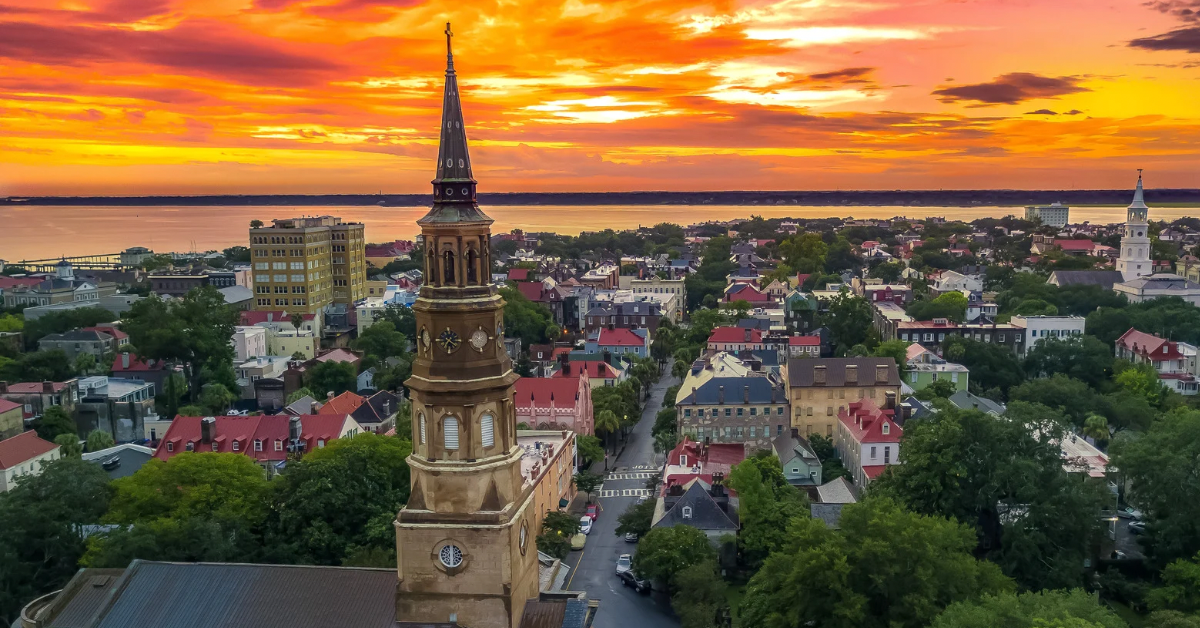
Charleston is marketed as charm and civility — church steeples, pastel facades, cobblestone streets. But the Lowcountry has seen mass violence, political executions, corruption, hate crimes, and nationally watched murder trials. Some of these events happened inside the historic district. Others unfolded across the broader coastal region.
These are not arranged in walking order. They span different eras and different parts of Charleston and the surrounding Lowcountry.
If you want a coherent, walkable true crime experience inside historic Charleston — designed for flow and narrative impact — GhostTourFun offers a structured route at [www.GhostTour.Fun] What follows here is a broader historical overview.
The Denmark Vesey Conspiracy (1822)
Location: Charleston
In 1822, Denmark Vesey, a formerly enslaved man who had purchased his freedom, was accused of organizing a large-scale slave rebellion. Authorities alleged the plan involved seizing weapons, killing slaveholders, burning sections of Charleston, and escaping to Haiti. Testimony claimed the uprising could have resulted in thousands of deaths if carried out.
The conspiracy was uncovered before it began. Vesey and dozens of accused co-conspirators were arrested in secret proceedings. Thirty-five men were executed. The case led to sweeping crackdowns, stricter slave codes, and the construction of new guard systems across the city. Historians still debate how extensive the plan truly was, but at the time, Charleston’s white population believed it had narrowly avoided mass bloodshed and urban destruction.
The Emanuel AME Church Massacre (2015)
Location: 110 Calhoun Street
On June 17, 2015, a white supremacist entered Emanuel African Methodist Episcopal Church during Bible study and murdered nine Black parishioners, including State Senator Clementa C. Pinckney. The attack was one of the deadliest racially motivated mass shootings in modern American history. The gunman was later convicted and sentenced to death in federal court. The crime permanently altered Charleston’s national identity.
The Murdaugh Murders (2021–2023)
Location: Colleton County, Lowcountry Region
Though occurring outside Charleston proper, the Murdaugh case dominated South Carolina headlines and deeply affected the Lowcountry. In 2021, Maggie and Paul Murdaugh were shot and killed at the family’s estate. In 2023, Alex Murdaugh — a prominent attorney from a powerful legal dynasty — was convicted of their murders. The trial exposed layers of financial crimes, corruption, and abuse of power tied to one of the region’s most influential families. The case became one of the most widely covered murder trials in recent American history.
The Old City Jail Executions (1800s–1900s)
Location: 21 Magazine Street
Charleston’s Old City Jail housed pirates, Civil War prisoners, and convicted murderers. Executions were carried out on the premises over more than a century of operation. Public hangings in earlier periods were meant as deterrence, but they also became spectacles. The jail represents a concentrated site of state-sanctioned death.
The 1886 Charleston Earthquake Aftermath
When the 7.0 magnitude earthquake struck in 1886, the destruction triggered panic, looting, and violent confrontations. Armed patrols were organized to restore order. While the quake itself was natural, the aftermath included deadly altercations during one of the city’s most destabilized moments.
The Murder of College Student Samantha Josephson (2019)
Location: Columbia, Statewide Impact
Although this tragedy occurred in Columbia, it reverberated across South Carolina, including Charleston’s large university population. Josephson was murdered after mistakenly entering a vehicle she believed was her rideshare. The crime led to statewide rideshare safety awareness legislation and remains one of the most shocking recent cases in the state.
The Orangeburg Massacre (1968)
Location: Orangeburg, Regional Impact
In 1968, law enforcement opened fire on student protesters at South Carolina State University, killing three young men and injuring dozens. Though not in Charleston, the event deeply impacted civil rights tensions across the state, including Charleston. It remains one of the most significant instances of deadly force used against civil rights demonstrators in South Carolina.
Reconstruction-Era Political Killings (Late 1800s)
Location: Charleston and surrounding counties
The Reconstruction period saw political violence across South Carolina, including assassinations and mob attacks. White supremacist groups targeted Black political leaders and allies in efforts to regain control of state government. Charleston, as a political center, felt the ripple effects of this violent struggle for power.
The Stono Rebellion (1739)
Location: Near Charleston
One of the largest slave uprisings in the British colonies began near Charleston in 1739. Enslaved Africans seized weapons and marched south, killing white colonists along the way. The rebellion was violently suppressed, and many participants were executed. The event led to harsher slave laws and remains one of the bloodiest early uprisings in colonial American history.
Modern Gang and Multi-Victim Shootings (2000s–Present)
Location: Charleston and North Charleston
Like many American cities, Charleston and neighboring North Charleston have experienced periods of concentrated gun violence, including multi-victim shootings tied to neighborhood disputes and gang activity. These cases rarely become national stories but account for a significant portion of the region’s modern homicide statistics.
Charleston’s history includes rebellion plots, racial terror, public executions, political bloodshed, and modern mass murder. The city’s beauty does not erase the violence embedded in its past.
If you want a focused, walkable true crime experience inside historic Charleston — one that connects verified cases in a smooth, intentional route — GhostTourFun offers a professionally structured tour at [www.GhostTour.Fun]
Charleston’s charm is real. Its history of blood and power struggles is real too.