Top 10 Revolutionary War Sites to Revisit in Charleston 250 Years Later
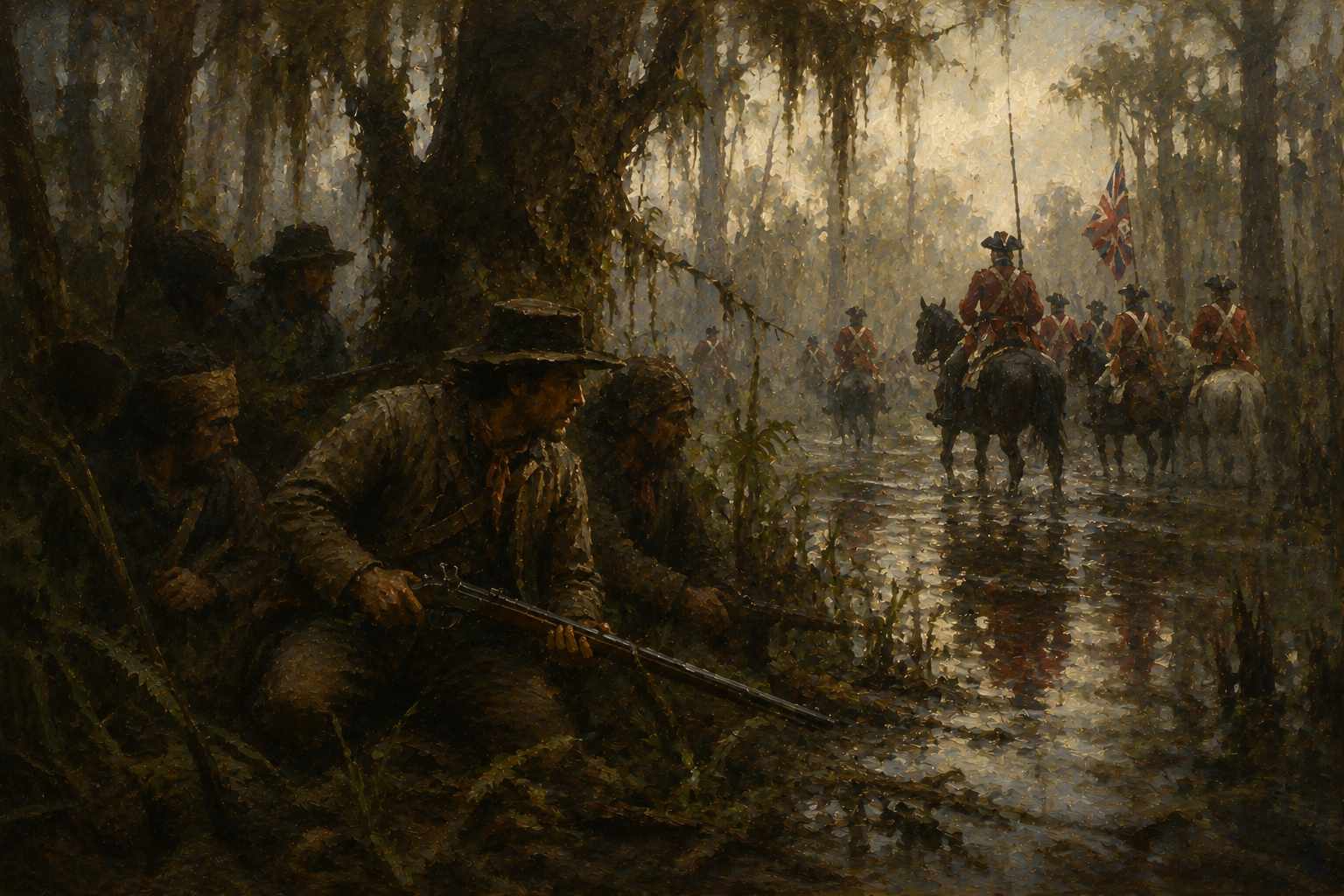
Charleston is one of the most important Revolutionary War cities in America.
When people think of the American Revolution, they often think of Boston, Philadelphia, Lexington, Concord, or Yorktown. But Charleston was one of the great prizes of the war. The British wanted it badly. Patriots defended it fiercely. Cannonballs tore through homes and churches. British soldiers occupied the streets. Rebel leaders were arrested, imprisoned, exiled, and in some cases executed.
Now, 250 years later, Charleston is one of the best places in America to revisit Revolutionary War history.
If you want to experience this story in person, here are ten of the best Revolutionary War sites to see in Charleston.
1. The Old Exchange and Provost Dungeon
The Old Exchange is one of Charleston’s most powerful Revolutionary War sites. During the British occupation, the building became a symbol of imperial control. Patriot prisoners were held here, and the Provost Dungeon became one of the most feared places in occupied Charleston.
This is also connected to the story of Isaac Hayne, a South Carolina Patriot who became a martyr after the British executed him in 1781. His death enraged many Americans and helped turn public feeling even more fiercely against British rule.
For anyone interested in Revolutionary War Charleston, this is essential.
2. The Powder Magazine
The Powder Magazine is the oldest surviving public building in South Carolina, but the most explosive Revolutionary War story connected to powder storage in Charleston happened nearby after the city surrendered in 1780.
British troops were collecting captured weapons and gunpowder when a catastrophic explosion ripped through the city. Thousands of pounds of gunpowder detonated, sending debris, weapons, and body parts into the air. More people died in this disaster than during the entire siege bombardment itself.
It is one of the most horrifying episodes in Charleston Revolutionary War history.
3. Circular Congregational Church
During the Siege of Charleston, British artillery fired into the city. Churches, homes, streets, and families were all vulnerable. Cannonballs did not care who was inside a building.
Circular Congregational Church stands near the heart of that story. It helps visitors imagine what it was like for ordinary Charlestonians trapped inside a city under bombardment. The siege was not just a military event. It was psychological terror. Every boom in the distance meant the next impact might land on your roof.
This stop makes the war feel immediate.
4. Fort Moultrie and Sullivan’s Island
Fort Moultrie is one of South Carolina’s great Revolutionary War landmarks. In June 1776, British warships attacked the unfinished fort on Sullivan’s Island. The British expected an easy victory.
They did not get one.
The fort’s palmetto-log walls absorbed and deflected cannon fire. William Moultrie and his men held the line, and the British fleet was forced to withdraw. This victory helped prove that the British Empire was not invincible.
The South Carolina flag itself points back to this moment, with its palmetto tree and crescent tied to the state’s Revolutionary War identity.
5. The Miles Brewton House
After Charleston fell in 1780, British commanders needed places to operate from. The Miles Brewton House became one of the grand homes used by British leadership.
Inside homes like this, occupation became personal. Maps were spread across tables. Officers planned arrests and military movements. Families had to live under the presence of hostile strangers. The Revolution was no longer an abstract argument over taxes or rights. It was in the dining room.
This site captures the humiliation of occupation.
6. Philadelphia Alley
Philadelphia Alley, once known as Cow Alley, is one of Charleston’s most atmospheric historic passages. It is famous for dueling culture, and that culture helps explain the emotional engine behind the Revolution.
Charleston was a city obsessed with honor. Men fought over insults, reputation, and public humiliation. To many Patriots, Britain’s treatment of the colonies was not just bad policy. It was an insult.
Philadelphia Alley helps visitors understand that the Revolution was not only about taxes. It was about dignity, pride, power, and the refusal to be treated as inferiors.
7. The French Huguenot Church
The French Huguenot Church connects beautifully to the story of Francis Marion, the “Swamp Fox.”
Marion was shaped by the Lowcountry: rivers, swamps, insects, heat, mud, and impossible terrain. After Charleston fell, he became one of the most elusive Patriot commanders in the South. British forces chased him through the swamps and failed to catch him.
His warfare was fast, local, irregular, and brutal. He knew the land. The British did not.
Charleston’s Revolutionary War story does not end when the city falls. In many ways, that is when the resistance becomes even more dangerous.
8. The Pink House
The Pink House is one of Charleston’s oldest buildings and connects to the rougher world of taverns, sailors, soldiers, and young men looking for trouble.
It also connects to William Jasper, the soldier who became famous at Fort Sullivan. During the British attack in 1776, a cannonball knocked down the fort’s flag. Jasper climbed over the wall under fire, recovered it, and raised it again.
A fallen flag could signal defeat. Jasper made sure the British saw that Charleston was still fighting.
His story is one of the great acts of Revolutionary War courage in South Carolina.
9. The Old Slave Mart
The Old Slave Mart reveals one of the deepest contradictions of Revolutionary Charleston.
In 1776, the Declaration of Independence was read publicly in Charleston. Its words declared that all men were created equal and possessed rights given by the Creator. Yet the slave trade continued nearby.
During the war, the British offered freedom to enslaved people who escaped Patriot masters and reached British lines. Thousands fled. Some served with British forces as laborers, scouts, guides, soldiers, and cavalrymen.
The Revolution in Charleston was not simple. It was a war for liberty fought in a society that still denied liberty to many people. Any serious Revolutionary War tour of Charleston has to face that truth.
10. Charleston’s Historic Streets Themselves
The final Revolutionary War site is not one building. It is the city.
Charleston’s streets still carry the memory of bombardment, occupation, imprisonment, resistance, and survival. British troops marched here. Patriot leaders were arrested here. Cannon fire echoed across the city. Families hid in fear. Spies carried intelligence. Soldiers, civilians, enslaved people, and political leaders all made choices that shaped the future of America.
That is what makes Charleston so powerful.
You are not just looking at old buildings. You are walking through the battlefield of an empire.
Experience Charleston Revolutionary War History With Ghost Tour Fun
If you want to go deeper, take the self-guided audio tour Charleston Under Siege: Revolutionary War History from Ghost Tour Fun.
This story-driven walking tour takes you through key Revolutionary War locations in historic Charleston, including sites connected to the Siege of Charleston, British occupation, Patriot resistance, Francis Marion, Christopher Gadsden, William Moultrie, William Jasper, Isaac Hayne, the Powder Magazine explosion, the Old Exchange, and more.
It is not a boring textbook lecture. It is a dramatic audio experience designed to help you feel what happened here.
You can explore at your own pace, pause whenever you want, and experience the story from publicly accessible exterior locations.
Learn this story and more on the most awesome Revolutionary War history tour in Charleston at www.ghosttour.fun