Bridgerton Filming Locations in Bath, England
If you’re coming to England because of Bridgerton, Bath is the right city. The production repeatedly used Bath’s Georgian streets to create “Regency London,” and the density of preserved architecture means you can see multiple filming locations within a short walking distance of one another.
Before diving into the locations, here’s one important distinction: the list below is not arranged in walking order. It’s simply a collection of the most recognizable and rewarding filming spots. If you’d prefer a coherent, optimized walking path that flows naturally through the city without backtracking, you can follow a professionally designed self-guided route at http://www.GhostTour.Fun . That tour has already mapped the smoothest path and built the historical narration around it.
Now, here are the key places you’ll want to see.
No. 1 Royal Crescent
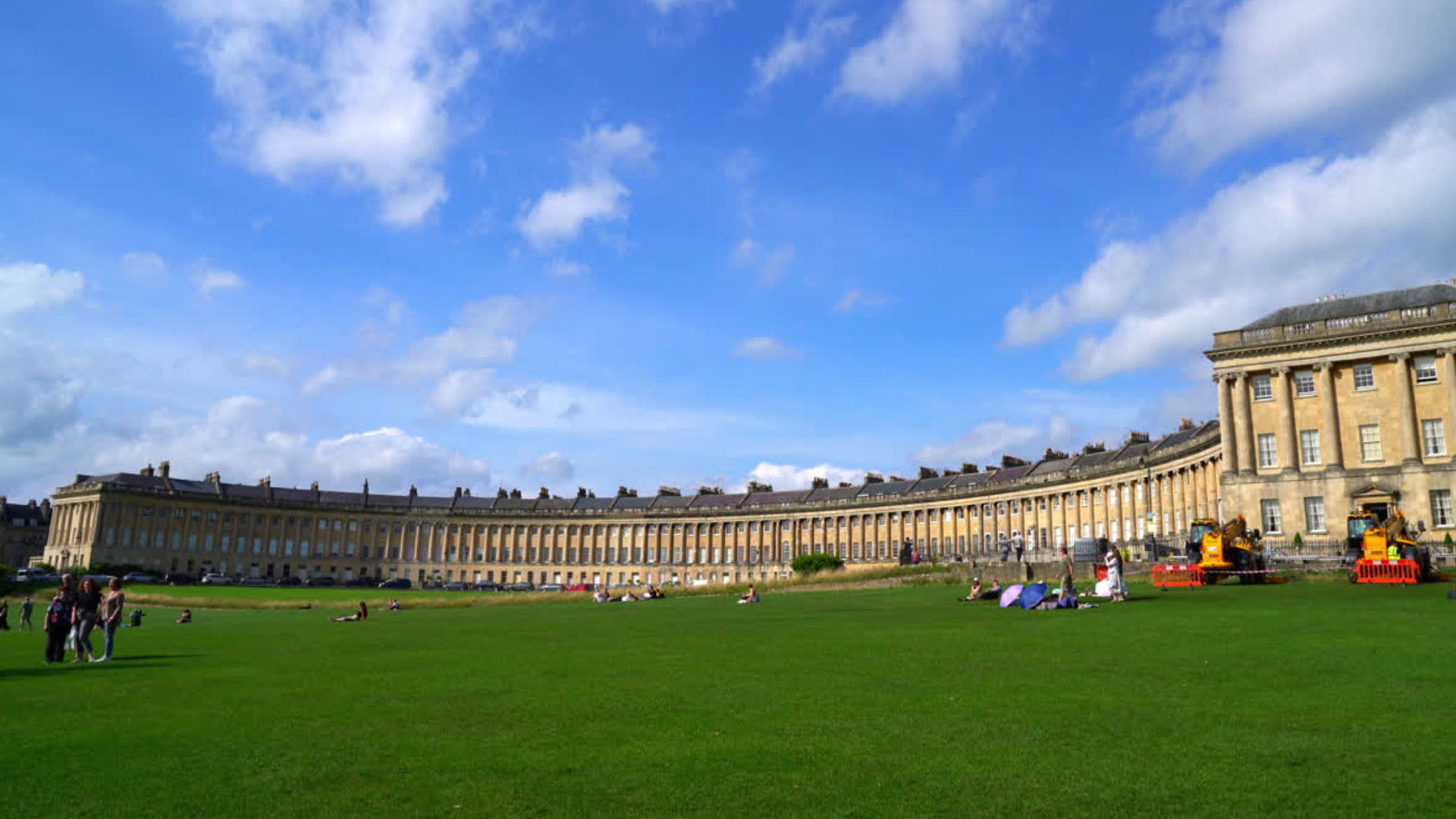
The exterior of this Georgian townhouse doubled as the Featheringtons’ London residence. Today it operates as a museum interpreting late 18th-century domestic life, both upstairs and downstairs. Address: No. 1 Royal Crescent, BA1 2LR. Expect to spend about 60–90 minutes if you go inside. The museum is typically open Tuesday through Sunday from 10:00am to 5:30pm, with last entry around 4:30pm. It’s one of the strongest “step into the world” interiors in Bath.
The Royal Crescent
Even if you skip the museum interior, the sweeping curve of the Royal Crescent is essential. Built between 1767 and 1775 by John Wood the Younger, this 500-foot façade instantly reads as elite Regency grandeur. Exterior filming used this streetscape for carriage and society sequences. It’s free to visit and especially photogenic from the lawn-facing side.
The Holburne Museum
The Holburne’s façade is widely recognized as Lady Danbury’s residence in the series. Address: Great Pulteney Street, BA2 4DB. It’s a functioning museum, generally open 10:00am–5:00pm (with slightly later Sunday openings). Adult admission is typically around £16.50. Beyond the façade photo, the galleries make this a worthwhile interior stop.
Abbey Green and the Abbey Deli
Tucked just behind the Roman Baths area, Abbey Green is where the Abbey Deli storefront stood in as the Modiste dress shop in the first two seasons. Address for the shopfront: 2 Abbey Street, BA1 1NN. It’s free to wander the square, and the café usually operates roughly 9:00am–4:30pm. This is one of the easiest and most recognizable street-level filming spots.
Bath Street
With its elegant colonnades and symmetrical stone façades, Bath Street appears in multiple promenade scenes, including early Simon and Daphne moments. The north side dates to 1791 as part of the Bath Improvement Scheme. It’s free, central, and ideal for strong perspective photography.
Bath Guildhall
The Banqueting Room and staircase areas were used for ballroom scenes, including a major Season 1 event. Address: High Street, BA1 5AW. The building is typically open weekdays during business hours, though interior access can vary due to events. Public entry is often free, but concerts and special events are ticketed separately.
Bath Assembly Rooms
Address: Bennett Street, BA1 2QH. Designed in 1769 and completed in 1771, the Assembly Rooms were built for dancing and music — exactly the kind of social environment that defines Bridgerton. They are currently closed for renovation and expected to reopen in 2027, so for now this is an exterior architectural stop.
12 Trim Street
Now operating as a hair salon, this building served as Gunter’s Tea Shop on screen and is associated with one of the show’s most talked-about scenes. Address: 12a Trim Street, BA1 1HB. It’s best viewed from the exterior, as it is an active business.
Beauford Square
Built in 1730 to a design by John Strahan, this quiet square was used for additional street filming. It’s smaller and more intimate than the crescents, making it a quick but atmospheric stop. It’s free to visit and rarely crowded compared to larger landmarks.
Edward Street
Located just off Great Pulteney Street near the Holburne Museum, Edward Street was used prominently in later seasons, including scenes featuring horses, carriages, and costumed extras. Many sequences were filmed near the junction by Dukes Bath. The surrounding development dates back to the 1790s, reinforcing its period authenticity.
Bath’s city center is compact and best explored on foot. You can realistically see all of these locations in a day without rushing, but if you simply wander between them you may end up doubling back or missing historical context that makes the visuals more meaningful.
If you want a smooth, intelligently designed walking experience that connects some of these filming spots in the most efficient order, with narration explaining the Georgian history that made Bridgerton possible, follow the optimized self-guided route at http://www.GhostTour.Fun . The path has already been thought through so you can focus on the architecture, the atmosphere, and the history.